
Blog
Yantra Biz
June 27, 2026
How to Choose the Right Paper Cutting Machinery for Your Production Line
Setting up an efficient production line requires careful planning and smart equipment choices. In the paper and packaging industries, your finishing equipment dictates your final product quality. If your cuts are uneven, or if your machines break down, your entire business suffers.
When you are looking for used paper cutting machinery you have to make an important choice for your place. This guide is here to help you understand everything, about choosing the paper cutting machinery for what you need to make. You will learn how to pick the paper processing equipment for your specific production needs.
Why Choosing the Right Used Paper Cutting Machinery Matters
The equipment selection you make will have a direct effect on your profits, product quality, and the safety of the work environment. An investment in the right used paper cutting machinery guarantees that your production line will operate efficiently without any surprise hold-ups.
When you match your machinery to your material types and volume demands, you minimize waste. You also lower energy consumption and reduce labor costs. A bad choice leads to frequent downtime, poor edge quality, and unhappy clients. Making an informed decision safeguards your business reputation and boosts success.
1. Understand Your Production Requirements
Before browsing catalogs, analyze your current and future production needs.
- How much paper do you process daily?
- What are the maximum dimensions of your raw materials?
- What is your facility’s physical layout and power capacity?
Answering these questions prevents you from buying a small machine that slows you down. It also stops you from buying a massive machine that drains your budget.
2. Identify the Type of Paper Processing Needed
Different products require different processing methods. You might cut heavy cardboard, delicate tissue, laminated sheets, or standard paper. The thickness and density of your material dictate the blades and clamping pressure you need. Ensure the machine you select is rated for the exact materials you handle.
3. Evaluate Machine Cutting Accuracy
In the paper industry, tiny errors cause big problems. Inaccurate cuts lead to wasted material and rejected batches. Look for machines equipped with advanced computer controls and precise gauges to guarantee accuracy on every single cut.
4. Consider Paper Slitting Capabilities
If your production involves converting large master rolls into smaller rolls, look closely at paper slitting machines. These units use circular knives to slit paper rolls smoothly. Evaluate whether your line needs an independent slitting unit or a system that cuts and slits simultaneously.
5. Assess Automation Features
Modern paper converting machinery relies on automation to boost safety. Automated features include programmable cutting steps and automatic loading lifts. Automation removes operators from hazardous zones, lowering the risk of workplace injuries.
6. Check Production Speed and Capacity
Your machinery must keep pace with your primary printing equipment. Check the machine’s cycle speed and its maximum pile height. Balancing speed with accuracy ensures that your finishing department never becomes a bottleneck.
7. Review Machine Durability and Build Quality
Industrial machinery is an investment. Look for equipment made with cast-iron frames and steel parts. A sturdy build helps reduce vibrations when in use, which keeps cutting precise over years.
8. Evaluate Maintenance and Service Support
Every machine needs maintenance to work well. Choose equipment that makes it easy to replace parts, like blades and hydraulic filters. Make sure the manufacturer gives maintenance plans and troubleshooting guides.
9. Compare New and Used Paper Machinery
Budgets are always a factor. Brand-new machines offer warranties, but high-quality used paper machinery from reputable brands can offer great value. If you choose used equipment, ensure it has a verified maintenance history.
10. Choose a Trusted Paper Machinery Supplier
Your relationship with your machinery supplier is vital. A trusted supplier does not just sell hardware. They provide expert advice, help with installation, train your operators, and offer reliable technical support.
Key Factors That Impact Paper Cutting Machinery Performance
To get the best return on investment, you must understand the elements that govern how your machinery performs under daily operational stress.
Cutting Precision and Quality Standards
The sharpness and material of the cutting blades dictate edge quality. High-speed steel or tungsten carbide blades maintain their edge longer, ensuring clean cuts that meet strict quality standards.
Machine Speed and Production Efficiency
Efficiency is not just about blade speed. It involves the entire cycle time, including loading paper, alignment, clamping, cutting, and unloading. Look for air tables that allow operators to slide heavy paper stacks with minimal effort.
Compatibility with Different Paper Types
A versatile factory handles diverse orders. Your machinery should be adaptable. Adjustable clamping pressure prevents delicate or glossy papers from wrinkling while holding dense paperboards firmly in place.
Integration with Existing Paper Converting Machinery
Your new cutter should not operate alone. It needs to fit into your current workflow. Consider how easily the machine integrates with your printers, folders, wrappers, and other paper converting machinery.
Common Mistakes to Avoid When Choosing Used Paper Cutting Machinery
Avoiding these frequent mistakes will save your business from costly operational headaches later.
Selecting Machinery Based Only on Price
Choosing the cheapest used paper machinery is a recipe for high maintenance costs and poor cut quality. Focus on the total cost ownership, which includes purchase price, energy use, and maintenance.
Ignoring Future Production Expansion Needs
Buying a machine that only satisfies your current volume means you will outgrow it quickly. Factor in your business growth goals for the next three years. Opt for higher-capacity machinery that can handle increased workloads.
Overlooking Maintenance and Operating Costs
Some machines are cheap to buy but expensive to run. High power consumption or expensive replacement blades can quickly drain your profits. Ask for detailed estimates of operating costs before signing a contract.
Failing to Verify Spare Parts Availability
Even the best machines experience wear and tear. If a vital sensor breaks and takes weeks to ship, your production line stops. Verify that spare parts are stocked locally or can be delivered quickly by your supplier.
Conclusion- Invest in the Right Paper Cutting Machinery for Long-Term Success
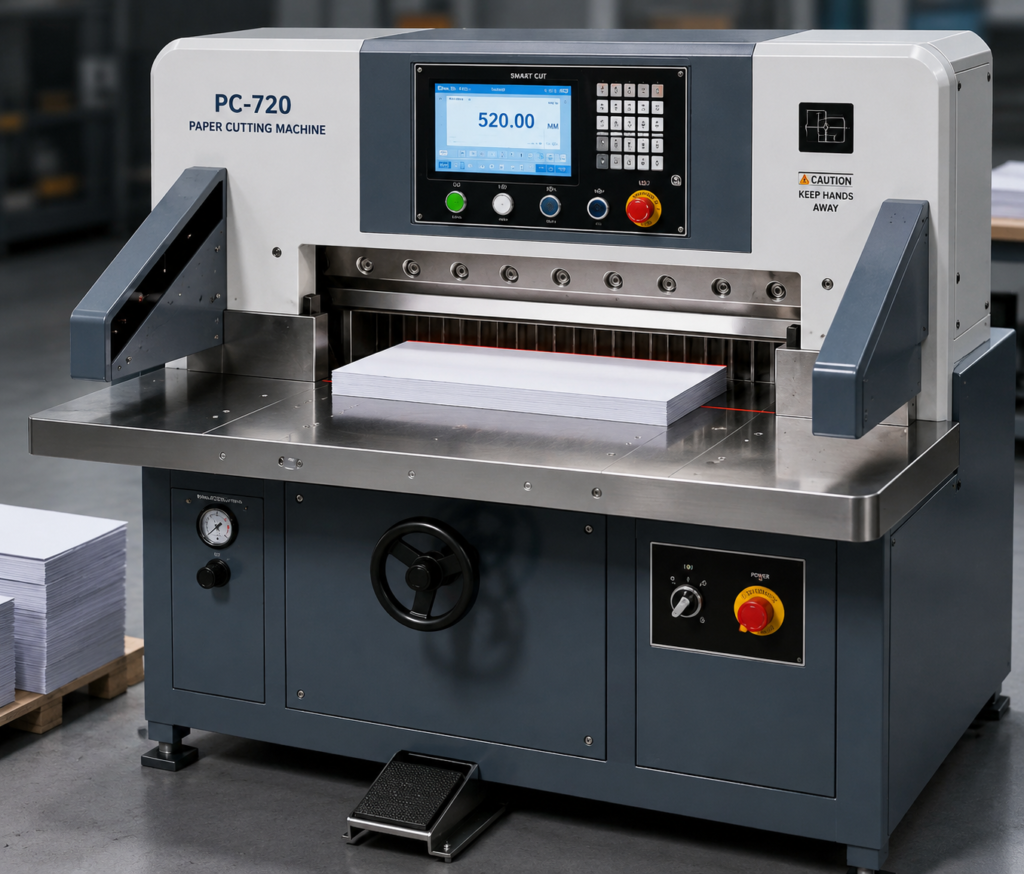
Choosing the right used paper cutting machinery is a strategic decision that shapes the future scalability and profitability of your operations. By analyzing your volume, material specifications, and automation needs, you can select a system that simplifies your workflow.
We believe in empowering businesses with the right knowledge and equipment solutions to succeed. Whether you invest in new systems or opt for vetted used paper machinery, prioritizing build quality and supplier support will set your production line up for success.
 Visit Yantra Bizhyp.com and start your digital transformation today!
FAQs About Used Agricultural Machinery
Yes. Heavy farm equipment from good brands lasts for decades. Buying used lets you avoid steep price drops while getting a reliable machine for less money.
It reduces costs through lower purchase prices, lower loan interest, and cheaper insurance premiums. This keeps more cash in your farm bank account.
Farmers should check the metal frame for cracks, review old maintenance logs, make sure parts are available locally, and test the machine under a heavy load.
You can find it at specialized farm dealerships, online equipment web pages, local farm auctions, and regional equipment sales networks.
Yes. It lets you upgrade from small, broken tools to larger, faster machines without spending too much money. Better tools help you get more work done each day.