Blog
Yantra Biz
October 5, 2026
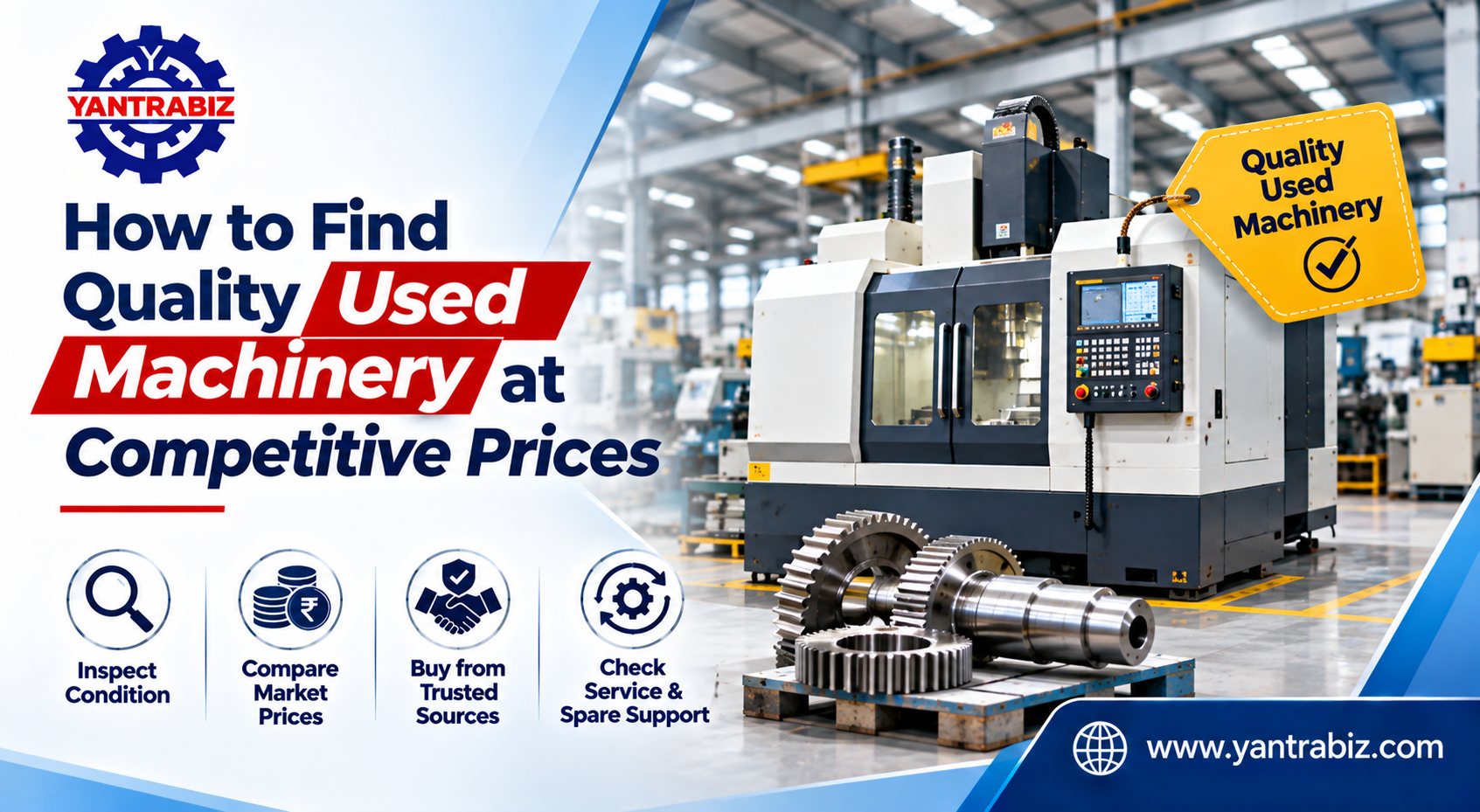
How to Find Quality Used Machinery at Competitive Prices
A new machine costs a lot. That is why many factory owners, farmers, and small units choose used ones. The savings can be big. But a low price means little if the machine breaks in a month.
The goal is a good machine at a fair price. This guide shows you how to find used machinery for sale that you can trust. It starts with one simple step.
1. Know Exactly What You Need
Write down what the machine must do. Note the output per hour, power needs, size, and the material it will handle. Add your budget, including freight and setup.
A clear list keeps you safe from sales talk. It also lets you compare machines fairly. With the list ready, you can pick where to search.
2. Search in the Right Places
You may purchase used equipment through dealers, auctions, individuals within your area, and online sites. While auctions are inexpensive, it is usually not possible to test the equipment. Local owners may give a fair price, but finding them takes time.
A marketplace lets you compare many listings at once. Pick one that checks its sellers. On Yantra Biz, sellers are verified before their listings go live. You can browse 11 industries, from plastic and pharma to food and chemical processing. Filters for condition, location, brand, and budget save time.
Once you find a promising listing, look at the person behind it.
3. Check the Seller Before the Machine
A good machine from a bad seller is still a risk. Ask who owns the machine and why they are selling it. A plant that moved to a bigger line gives a better reason than a seller who says nothing.
Ask for a phone number and a business address. Talk to the seller directly. If answers stay vague, walk away. If they feel clear and honest, go see the machine.
4. Inspect the Machine in Person
Never pay in full for a machine you have not seen. If you cannot travel, send a trusted mechanic. Check these points:
- Age and running hours: Compare them to the normal life of that model.
- Wear: Look at belts, bearings, gears, seals, and motors.
- Rust and cracks: Check the frame and welds.
- Leaks: Look for oil or fluid under the machine.
- Test run: Watch it work under load for an hour. Listen for odd sounds.
- Safety parts: Guards, switches, and emergency stops must work.
- Controls: Every button, screen, and sensor should respond.
Take photos and videos as you go. They help if a dispute comes up later. Next, check that the papers match what you saw.
5. Ask for the Papers
Papers show the history of a machine. Ask for the purchase invoice, proof of ownership, service records, and the user manual. Service logs prove the machine was cared for. Missing papers raise questions, so ask why.
For deals across borders, ask about export papers and taxes before you pay. With the papers in order, you can work out the real price.
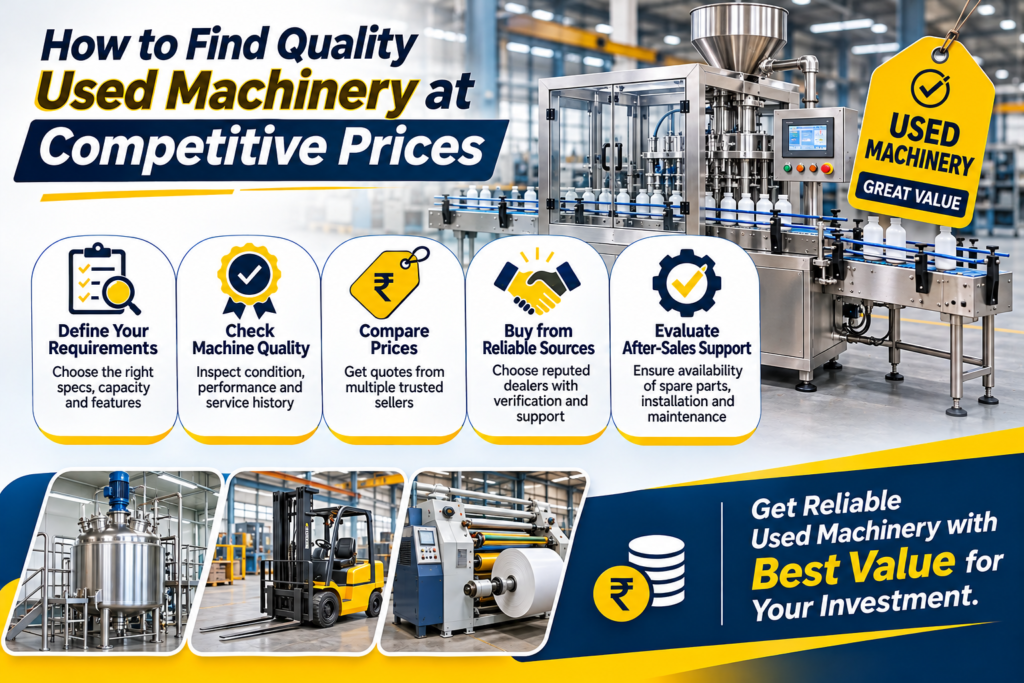
6. Compare the Full Price
The sticker price tells only part of the story. Add transport, install, spare parts, and repairs. A cheap machine in a far city can cost more once you add freight.
Check at least three similar listings. Compare age, hours, brand, and condition. Make sure spare parts are easy to find. A rare model with no parts can become a costly problem. Also ask what the machine costs new. If the gap is small, new may be the better buy.
Armed with these numbers, you can talk price.
7. Negotiate With Facts and Plan the Move
Use your inspection notes. If the belts need changing, ask for that cost to come off the price. Stay polite and clear. Put every agreed term in writing.
Know the gap between used and refurbished. A used machine is sold as it is. A refurbished one has been repaired and tested. It costs more but often saves repair work. Ask what was changed and who did it.
Then plan the move. Heavy machines need proper packing, trucks, and lifting gear. Get a transport quote before you commit. Prepare power, space, and a trained operator for day one.
How Yantra Biz Helps You Buy Used Machinery
Yantra Biz is a marketplace for used and refurbished industrial machinery, with buyers in 16+ countries. You message sellers directly and ask for specs, photos, and quotes. No middleman sits between you. The team can also help with inspections, transport referrals, and language support on cross-border deals. The app works in English, Hindi, and Tamil.
If you want to buy used machinery, it is a fast place to start. Still, run your own checks from the list above.
The same honesty applies when you are the seller.
Want to Sell Used Machinery? Be Honest
Buyers look for honest listings. If you plan to sell used machinery, follow the same rules in reverse. Share real photos and videos. State the age, running hours, and known faults. Keep service records ready. Set a fair price after checking similar listings.
Honest sellers earn trust and close deals faster. You can list your machines on Yantra Biz and reach buyers in 16+ countries.
Final Thoughts
Good used machinery is out there at fair prices. Know your need, check the seller, inspect the machine, read the papers, and compare the full cost. These steps protect your money and your output.
Ready to start? Browse used machinery for sale on Yantra Biz, or list your own machine today.
 Visit Yantra Bizhyp.com
to buy and sell used machines today!
Frequently Asked Questions (FAQ)
You can look at dealers, auctions, local owners, and online marketplaces. Choose a platform that verifies its sellers and lets you message them directly. Yantra Biz lists machines across 11 industries.
Look at the seller. Check out the machine in person. Watch it work. Get the receipt, ownership papers, and maintenance records. Don't hand over all your money before you see what you're buying.
Take clear photos and videos. Show what it looks like. Say how old it is. List the working hours. Be honest about any problems. Price it like other machines selling right now. Answer questions quick. People want fast responses.
It depends on age, make, hours of use, and machine's state. Calculate the total price of used machinery, which will include costs of delivery and repairs, against the price of a new one. If the difference is not considerable, go for the new one.
Ask for the purchase invoice, proof of ownership, service records, and the manual. For cross-border deals, also ask about export papers and taxes. Missing papers are a reason to ask more questions.