
Blog
Yantra Biz
June 20, 2026
Preventive Maintenance Tips for Used Paper Machinery
Buying pre-owned paper machinery is a smart way for mills to grow without paying huge prices for new gear. But used machines need a solid care plan to run their best. Since these machines already worked for years, regular upkeep is your best defense against sudden breakdowns.
At Yantra Digital, we know that looking after your equipment keeps your business moving forward. This guide shares clear tips to keep your pre-owned paper mill gear running smoothly every single day.
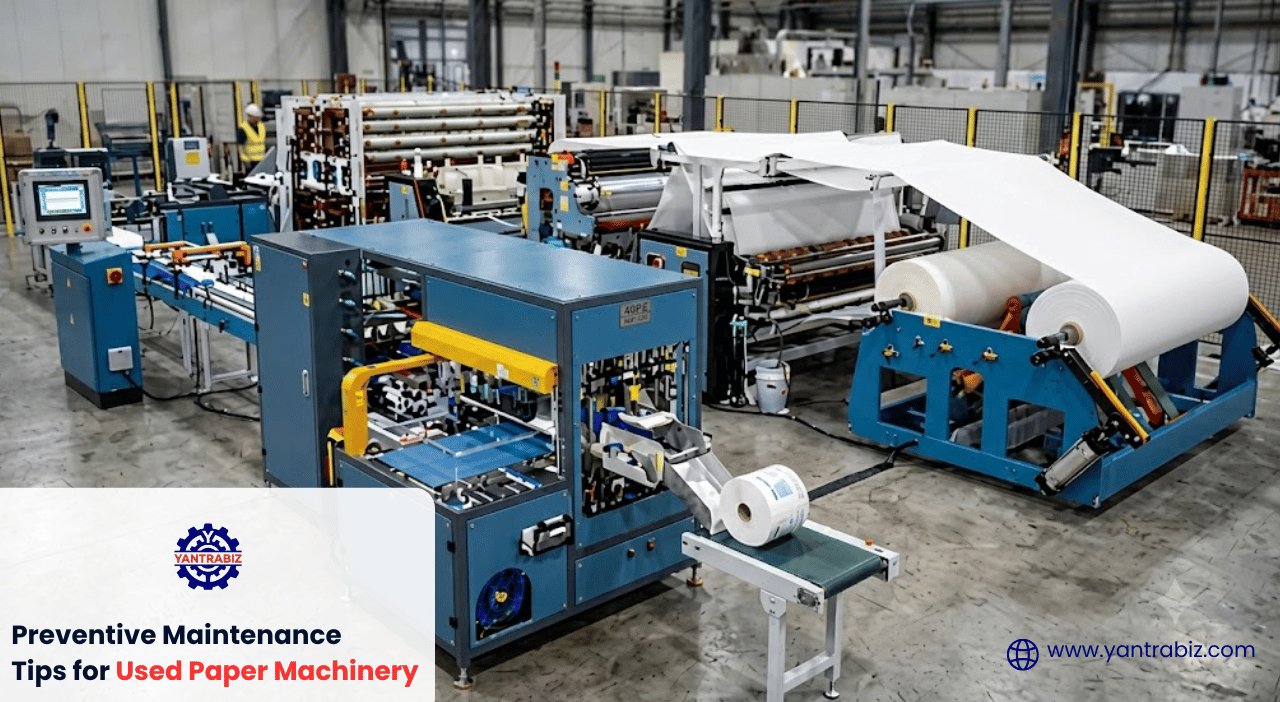
Why Preventive Maintenance Matters for Used Paper Machinery
Preventive maintenance means checking, cleaning, and fixing parts before they break. For used industrial paper equipment, this regular care is vital.
Extending the Lifespan of Paper Production Machinery
Paper machines are large, strong systems built to last for decades. Used paper production machinery already has some wear from its past life. Routine upkeep stops fast wear and tear. This ensures the machine gives you many more years of good service.
Reducing Unexpected Downtime and Repair Costs
When a machine stops out of nowhere, you lose money fast. You waste labor, miss deadlines, and spoil raw materials. Regular care costs very little. It lets you schedule fixes during hours when the mill is already quiet.
Improving Productivity and Equipment Efficiency
A clean, well-greased machine runs faster and uses less power. When gears line up and bearings stay cool, the entire line moves without a hitch. This helps you hit your daily production goals.
Ensuring Consistent Paper Quality
Making paper requires exact pressure, heat, and speed. Worn parts cause small changes that ruin your product. This leads to sheet breaks, uneven spots, or rough paper. Regular tuning keeps your paper quality steady.
Essential Preventive Maintenance Tips for Paper Machinery
Follow these ten basic steps to keep your used paper machinery in top shape.
1. Conduct Regular Visual Inspections
Operators must walk around the machine before every shift. Look for oil leaks, loose bolts, or worn wires. Finding a loose part early stops a giant breakdown later.
2. Keep Paper Machinery Clean and Free from Debris
Paper mills are messy places. They are full of wood pulp, water, and dust. This grime builds up on rollers and sensors. Regular cleaning stops sharp pulp dust from grinding into gears.
3. Lubricate Moving Components on Schedule
High heat and constant water destroy oil fast. Grease every moving part on a strict schedule. Good oil cuts down on friction and rust, which ruin metal quickly.
4. Monitor Bearings, Rollers, and Gears for Wear
Bearings carry heavy loads in a paper unit. Check them often for tiny cracks or flat spots. Look at gear teeth for chips so the machine does not lock up during a run.
5. Inspect Belts, Chains, and Drive Systems
Drive systems move power from the motors to the rollers. Check belts for cracks or slips. Check chains for tight fit and good grease. Replace any stretched parts right away.
6. Check Hydraulic and Pneumatic Systems Regularly
Paper units use fluid and air pressure to squeeze rollers. Look for oil drips. Check gauges to see if the pressure is right. Change old filters to keep the fluid clean.
7. Test Electrical Components and Control Panels
Dust and wet air can ruin electrical boxes. Open panels to clear out dust. Tighten loose wires. Test emergency stop buttons to ensure they work in a split second.
8. Monitor Machine Alignment and Vibration Levels
A crooked roller ruins paper tracking and wears out bearings fast. Use simple tools to check machine alignment. Watch out for shaking, which means a part inside is loose.
9. Replace Worn Parts Before Failure Occurs
Do not wait for a part to snap before you fix it. Track the life of blades, seals, and valves. Swap them out during planned downtime based on hours used.
10. Maintain Accurate Service and Inspection Records
Write down every single fix, oil change, and checkup in a logbook. This history helps you spot recurring issues and plan your repair budget for the year.
Key Areas That Require Special Attention in Used Paper Machinery
Some sections of a pre-owned machine work under brutal conditions and need extra eyes.
- Drying Cylinders and Steam Systems: This section handles high heat and pressure. Check steam joints for leaks. Drain water out of cylinders so they heat evenly.
- Press Section Components: This area squeezes water out of the wet pulp sheet. Check hydraulic cylinders and look for flat spots on the big rubber roller covers.
- Wire and Felt Systems: The forming wire and felts carry the delicate paper. Wash them with high-pressure water showers to stop pulp from clogging the mesh.
- Pumps, Motors, and Vacuum Equipment: Mills move tons of water and slushy pulp. Check vacuum pumps for strong suction. Clean motor fans so they do not overheat.
- Rewinding and Finishing Units: The end of the line must be exact. Keep slitter blades sharp. Check tension sensors so the final paper rolls wind up tight and straight.
Best Practices for Effective Paper Machine Maintenance
Good paper machine maintenance requires a simple, steady routine that everyone in the mill follows.
Develop a Preventive Maintenance Schedule
Set up a simple chart for daily, weekly, and monthly tasks. Stick to these times. Treat maintenance slots with the same respect you give to shipping deadlines.
Train Operators to Identify Early Warning Signs
Floor workers know the machine best. Train them to spot early signs of trouble. Teach them to report a new click, a hot part, or a weird smell right away.
Use Quality Replacement Parts and Consumables
It is tempting to buy cheap, generic parts for an old machine. Do not do it. Good parts fit better, last longer, and protect the rest of your machine from damage.
Implement Condition Monitoring Techniques
Stop guessing when a part will break. Use basic tools like heat pens to find hot wires. Use vibration sensors to catch a bad bearing before it stops the mill.
Common Maintenance Mistakes to Avoid with Industrial Paper Equipment
Watch out for these easy mistakes when handling your paper mill maintenance:
- Putting Off Small Fixes: Ignoring a small drip or a tiny noise is a bad idea. It leads to a massive, multi-day stop later. Fix small items today.
- Ignoring New Noise or Shaking: A machine that gets louder is telling you something is wrong. Stop the line and check it out.
- Using the Wrong Grease: All grease is not the same. Standard car grease fails in a hot, wet paper mill. Use grease made for high heat.
- Forgetting to Write Things Down: If you do not log your work, you will forget when you last changed a part. This leads to missed checks or wasted money.
How Preventive Maintenance Improves Paper Mill Performance
Regular care changes the way your entire mill runs.
|
Performance Benefit |
How It Is Achieved |
|
Lower Operating Costs |
Fixing small bugs early stops big repair bills and overnight shipping fees for emergency parts. |
|
Higher Reliability |
A machine you can trust means steady production numbers. You can promise delivery dates and hit them. |
|
Better Mill Safety |
Clean, well-kept machinery works safely. This cuts down on sudden breaks, fires, and factory accidents. |
|
More Output |
Eliminating short stops keeps the machine running at full speed. This gives you more total tons of paper each day. |
Conclusion- Protect Your Investment in Used Paper Machinery
Buying a used machine is a great way to save money. But its success depends entirely on daily care. Calean the machine, grease the bearings on time, and swap out old parts early. These simple steps turn an old machine into a strong, reliable worker. Take care of your paper gear, and it will run well for years to come.
Ready to take your business to the next level?
 Visit Yantra Bizhyp.com and start your digital transformation today!
FAQs About Used Paper Machinery
Walk around and check the machine visually before every shift. Perform deeper checks on gears, belts, and oil levels once a month during planned down hours.
Most problems come from bad bearings, clogged wires, leaking steam joints, and worn roller covers. Water and pulp dust cause most of this wear.
Paper machines run under heavy loads with lots of water and heat. Good grease coats moving metal parts. This stops friction, keeps parts cool, and blocks rust.
Clean the gear daily and use simple tools to check for high heat or shaking. This lets you find errors and fix them before the machine stops on its own.
Yes. Fixing parts on a schedule is much cheaper than waiting for a break. Sudden stops cost money in lost paper, broken tools, and rush repairs.