
Yantra Biz
May 30, 2026
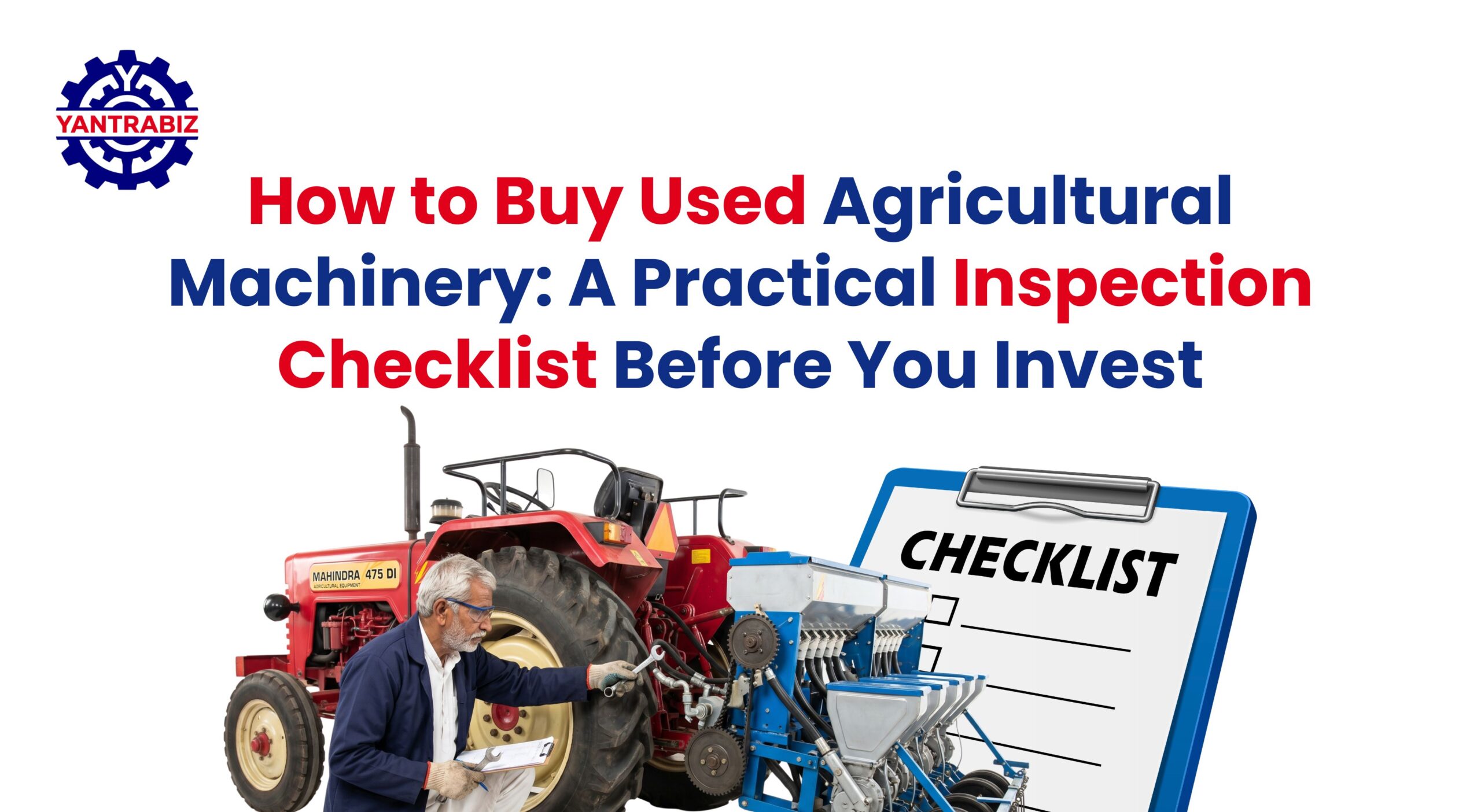
How to Buy Used Agricultural Machinery: A Practical Inspection Checklist Before You Invest
Buying farm equipment is a massive expense for any grower. New tractors and harvesters cost a fortune. Because of this, buying used agricultural machinery is a smart financial move.
However, buying used tools comes with real risks. A cheap machine can quickly turn into an expensive mistake. A proper buying plan helps keep your investment safe. This checklist will help you buy used farm equipment with confidence.
Why Farmers Choose Used Agricultural Machinery
The demand for second hand agricultural machinery keeps rising each year. Modern tools are built tough. They can easily last for decades if they receive proper care.
Lower investment compared to new equipment
New agricultural machinery & equipment often drops in value quickly. A brand-new tractor drops twenty to forty percent of its value in the first two years. When you buy used machines, the first owner takes that financial loss. You save thousands of dollars right at the start.
Faster return on investment for small and medium farms
Small farms operate on tight budgets. Buying cheap used tractor equipment helps you make a profit much faster. You take on less debt, which keeps your monthly bills low. Your cost per acre goes down, and your farm becomes stable.
Availability of reliable machinery in the secondary market
Many large farming companies replace their machinery every few years.Many buyers look for tax savings or updated machine features. This fills the market with reliable, mid-aged farming machinery. These tools still have thousands of working hours left in them.
Access to higher-capacity machinery at lower prices
Your budget might only buy a small, brand-new tractor. If you shop the used market, that same money buys a much larger machine. You can pull wider plows or bigger seeders. This choice increases your daily farm output without breaking the bank.
Important Factors to Consider Before Buying Used Agricultural Machinery
Do not browse listings without a strict plan. It is easy to buy the wrong machine if you do not know your exact needs.
Define your farming requirements clearly
Every farm has unique soil and fields. List your exact needs before you look at a single machine.
- Know your required horsepower.
- Check the hydraulic flow for your current implements.
- Measure your barn doors and narrow gates.
A machine that is too big or too weak will waste your time and money.
Set a realistic budget including repair costs
The true price of used gear is higher than the sticker price. Always keep fifteen percent of the purchase price back for sudden fixes. Used machines often need new oil, fresh filters, or new hydraulic lines. A safe cash buffer ensures you can start working without stress.
Research the machinery brand and model
Even great brands sometimes build a bad model line. Search online farming forums for common complaints. Talk to local mechanics who fix these units every day. Find out if a specific year has transmission issues or weak electrical parts.
Check machinery age and operating hours
Look closely at the hour meter. A well-maintained diesel tractor can work for thousands of hours before major repairs. However, hard work wears parts out faster than light work. Pulling a heavy plow in hard clay causes more wear than mowing dry grass.
How to Verify the Seller and Machinery Documents
A machine inspection should go beyond basic mechanical checks. You must verify the paperwork to avoid legal trouble later.
Check ownership and registration details
Make sure the seller actually owns the equipment. Ask to see the original bills of sale and registration papers. Match the seller’s identification card with the name on the title. This quick step protects you from buying stolen farm property.
Verify insurance and finance clearance status
Never buy equipment that has an active bank lien. If the seller owes money on the tractor, the lender can take it back. They can repossess the machine right out of your field. Use online state registries to confirm the machine is clear of all debt.
Confirm serial numbers and equipment specifications
Locate the steel serial number plate that is welded to the frame and ensure that you precisely match this number with the title deeds and the service books. If the plate is loose, scratched off, or missing, walk away. The machine might be stolen or much older than the seller claims.
Ask about previous repairs and replacement parts
Ask the seller for all past service receipts. A careful owner keeps records of every oil change and major fix. Check if they used original factory parts or cheap fixes. Knowing the repair history helps you predict how long the machine will last.
The Ultimate Pre-Purchase Inspection Checklist
When you stand in front of the machine, check these five physical areas carefully.
1. Fluids and Filters
- Engine Oil: Pull the dipstick out. The oil should be clear or black. Milky engine oil may show coolant mixing inside the engine. That is a sign of a cracked engine block.
- Hydraulic Fluid: The fluid should look like clean honey. A dark color and a burnt smell mean the system got too hot.
- Coolant: Remove the radiator cap only after the engine has cooled down. Look for oil floating on top.
2. The Engine and Cold Start
- Cold Start: Make sure the engine is cold before you turn the key. A cold start reveals how well the engine runs. Listen for heavy knocking or slow cranking.
- Exhaust Smoke: Blue exhaust smoke often points to engine oil burning inside the system. White smoke means it is burning coolant. Both colors signal major internal damage. Black smoke usually just means a dirty air filter.
- Engine Blow-by: Remove the oil cap while the engine idles. A heavy stream of smoke or deep pulsing is a bad sign. It means the engine is losing compression and needs a costly rebuild.
3. Frame and Undercarriage
- Welds and Cracks: Look at the frame and loader arms for fresh welds or thick, new paint. Farmers weld frames after they snap under heavy loads. A patched frame can break again when you lift heavy objects.
- Tires and Rims: New tractor tires cost thousands of dollars. Check the tread depth. Look for deep cracks in the sidewalls from sun damage. Inspect the steel rims for deep rust around the lug nuts.
Common Mistakes Buyers Should Avoid
Avoid these frequent errors to save your farm budget:
- Buying based only on price: Cheap machines usually have hidden problems. If a tractor price seems too low, something is broken. You will spend the saved cash on parts and repair labor anyway.
- Ignoring inspection and field testing: Never buy equipment based only on online photos. If the machine is far away, pay a local mechanic to check it. Photos hide oil leaks and bad noises easily.
- Overlooking spare part availability: Some brands might seem like a bargain. However, if a part breaks during harvest, you cannot find a replacement quickly. Stick to brands with local dealerships near your farm.
- Choosing oversized machinery for small farms: Big tractors look impressive but cause problems on small plots. They burn too much fuel and compress the soil. Heavy compaction harms root growth and lowers crop yields.
- Skipping expert evaluation: If you are not a mechanic, pay a professional to test the machine. A diesel tech can find deep engine faults that you might miss.
Benefits of Conducting a Field Test Before Purchase
Always test the machine in a real field before you pay. A simple parking lot test does not show how a tractor handles a heavy load.
Real-time performance evaluation
Drive the tractor into the dirt and engage a plow or mower. Watch how the engine and transmission handle the resistance. The gears should shift smoothly without grinding. The clutch should not slip when you accelerate.
Identifying hidden mechanical issues
Many faults only appear after the machine gets hot. Run the tractor for thirty minutes. Check if the hydraulic lift arms lose power as the oil warms up. Watch the temperature gauge to ensure the radiator works perfectly under stress.
Checking fuel efficiency and operating comfort
A field test shows you what it is like to work in the machine. Look at the fuel gauge during use. Notice the noise and vibration levels inside the cab. If the seat is broken or the steering pulls hard, you will face long, painful workdays.
Ensuring compatibility with farm operations
The test confirms the machine fits your current tools. Make sure your hydraulic hoses connect easily. Check that the power take-off shaft spins smoothly without shaking. Verify that the turning radius works for your specific field shapes.

Conclusion- Invest Smartly in Used Agricultural Machinery
Buying used equipment is a great way to grow your farm. It saves you capital, stops early depreciation losses, and gets you working fast.
The secret to a good purchase is using a strict system. Check the paperwork, inspect the fluids, and run the machine in the field. Leave your emotions out of the deal. If you follow this checklist from Yantra Digital, your used tractor will reliably serve your farm for many seasons.
Ready to take your business to the next level?
 Visit Yantra Bizhyp.com and start your digital transformation today!