Blog
Yantra Biz
October 20, 2026
A Buyer’s Checklist for Purchasing Used Industrial Equipment
A new machine is not always the best choice for a factory. New machines cost a lot, and delivery can take months. That is why many owners buy used equipment instead. A good second-hand machine gives the same output at a lower price. A poor one can cost more in repairs than a new machine would.
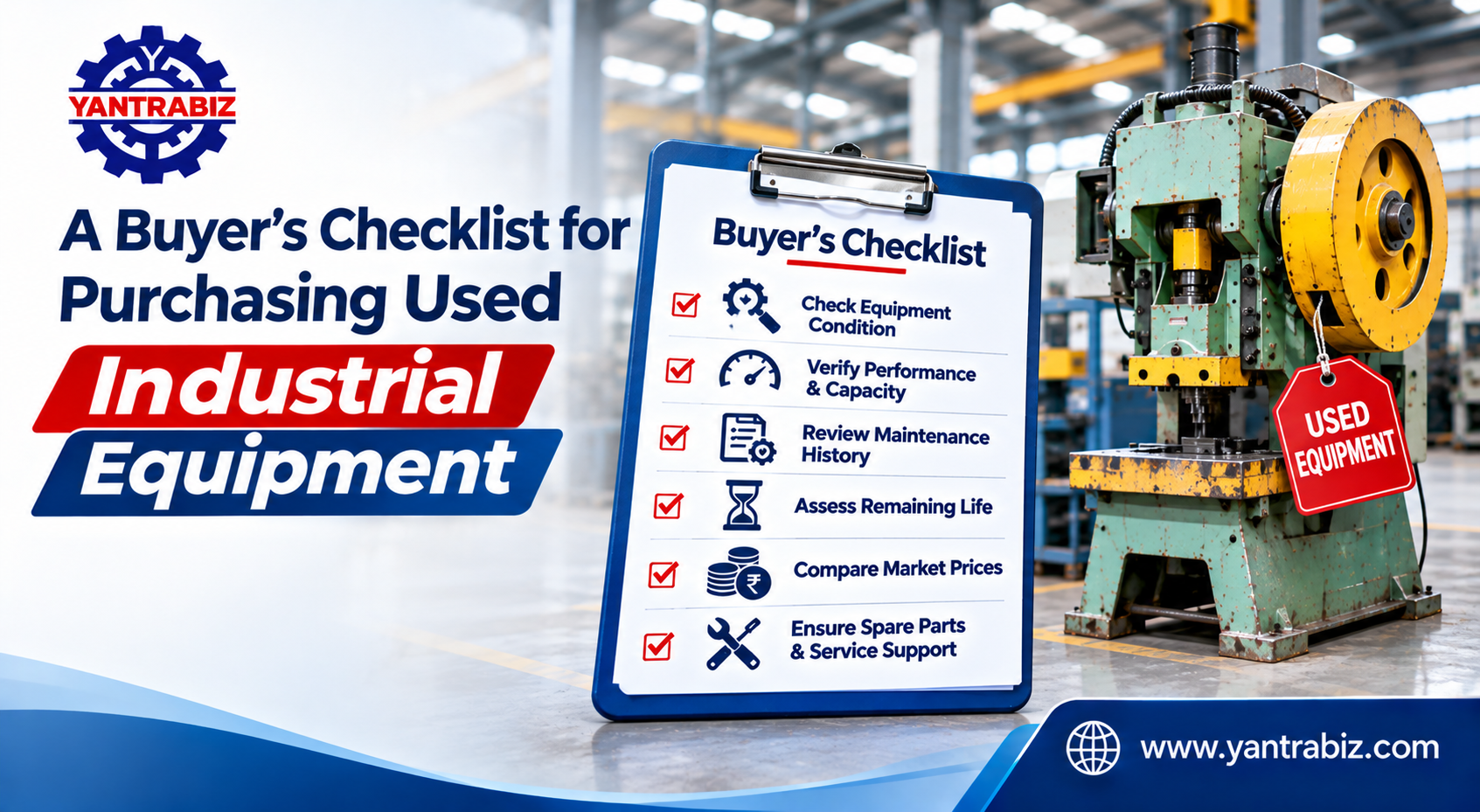
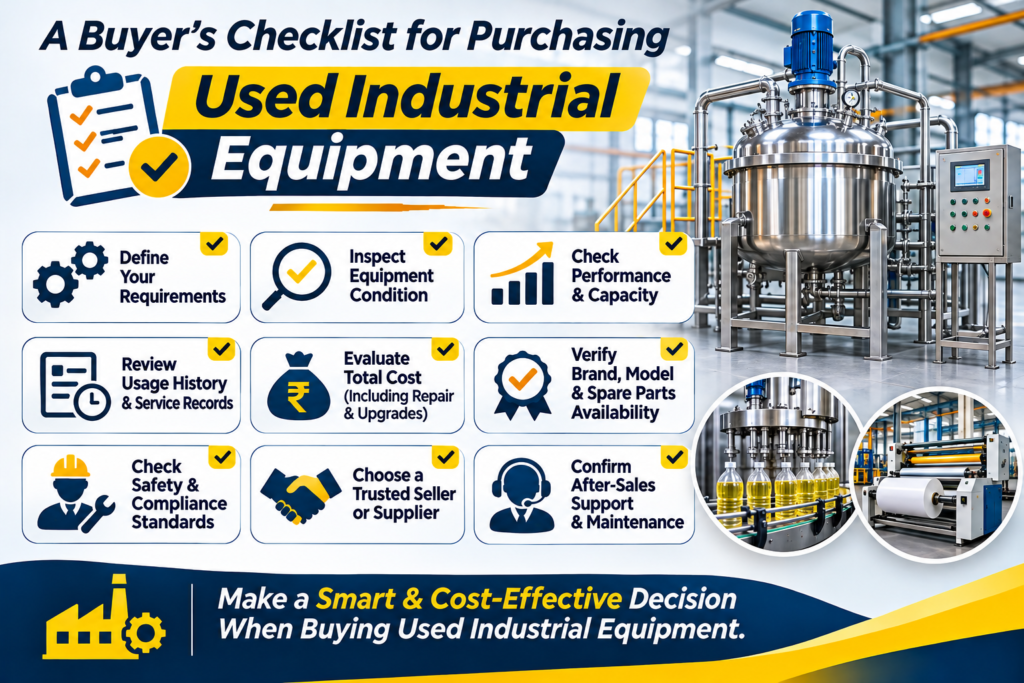
This checklist helps you plan, inspect, and close your purchase with care. Follow each step in order to lower your risk.
1. Know What You Need
Before you buy used equipment, write down your needs. Keep the list short:
- Output: units per hour or per day
- Size: floor space, ceiling height, and door width
- Power: voltage and load
- Material: what the machine will process
- Budget: machine price plus transport, setup, and training
A clear list stops you from chasing a deal that does not fit your plant. Many used machinery buyers lose money here. They pick a machine first and plan later.
2. Pick a Trusted Source
Where you shop matters as much as what you buy. Open ads and random contacts carry high risk. A verified marketplace is safer because sellers are checked first. Platforms like Yantra Biz list industrial machinery for sale from verified sellers across 11 industries. You can compare many options in one place and talk to the seller directly.
Check how long the seller has been active. Ask for references and read any reviews you can find.
3. Check Age, Hours, and Service Records
Every listing of industrial machinery for sale shows an age. Age alone does not tell the full story. A ten-year-old machine with good care can beat a four-year-old one that was run hard. Ask for:
- Year and model number
- Total running hours
- Service and repair records
- Parts that were replaced
- The reason for sale
A seller who shares records fast is usually honest. Be careful if the answers are vague.
4. Inspect in Person
Photos can hide problems. Visit the site yourself or send a trusted engineer. If you cannot travel, hire an outside inspector. Check these points:
- Frame and body: look for cracks, rust, bends, or weld repairs.
- Moving parts: bearings, gears, belts, and chains should run smooth and quiet.
- Motors: listen for odd noise and feel for extra heat.
- Hydraulics and air lines: look for oil leaks and weak pressure.
- Control panel: check wires, switches, and sensors for damage or messy fixes.
- Safety gear: stop buttons, guards, and locks must work.
5. Ask for a Test Run
Never pay for a machine you have not seen run. Ask the seller to run it under normal load, ideally with your own material. Watch the output quality and the speed. Let it run for at least an hour. Note any heat, shaking, strange sounds, or alarms. A machine that looks fine when idle can fail under load.
6. Verify Ownership and Papers
Paperwork protects you. Ask for:
- Invoice or proof of ownership
- Written proof that no loan is tied to the machine
- Manuals, drawings, and wiring diagrams
- Safety papers, where needed
- Import and export papers for cross-border deals
If the seller cannot show clear ownership, walk away. No discount is worth a legal fight.
7. Check Spare Parts and Support
Every machine needs new parts one day. Ask if parts for this model are still made. Ask how long delivery takes. Find out if the maker still offers service. Old machines with no parts supply can stop your whole line. Also check whether technicians near your plant know the brand.
8. Add Up the True Cost
The price tag is only the start. Add these costs:
- Dismantling and packing
- Transport and insurance
- Customs and taxes
- Base work and setup
- Power hookup
- Training and trial runs
- Spare parts to keep in stock
Compare the total with the price of a new machine. If the gap is small, buy new. If the gap is large, the used machine wins. Smart used machinery buyers compare the full cost, not just the sticker price.
9. Talk Price With Facts
Use what you found during the inspection. Worn parts, missing manuals, and needed repairs are fair reasons to ask for less. Stay polite and keep your numbers ready. Ask the seller to add spare parts, a short warranty, or free help with setup. Get every promise in writing.
10. Pay and Ship Safely
Do not pay the full amount up front. Split the payment into steps. Pay a small deposit to hold the machine. Pay a larger part after inspection. Pay the balance after delivery and a good trial run.
Sign a contract that lists the machine details, price, and delivery date. It should also say what happens if the machine does not match the listing. Pay by bank transfer or a secure escrow service so a clear record exists.
Ask the seller to remove and pack the machine with care. Take photos before loading and again on arrival. Insure the shipment.
Quick Checklist
- Write down your needs and budget
- Pick a verified source
- Review age, hours, and records
- Inspect in person or through an expert
- Watch a live test run
- Confirm ownership and papers
- Check spare parts and support
- Add up the full cost
- Talk price with facts
- Pay in steps and insure the delivery
Final Thoughts
The purchase of a second-hand machine could also prove to be a sensible decision provided that you are cautious while purchasing one. Take your time, be inquisitive, and above all, never forget to conduct an inspection. With a strategy in place while buying a used machine, you secure both your finances and your schedule. Compare several options and pick the one that fits your plant.
 Visit Yantra Bizhyp.com to buy and sell used machines today!
Frequently Asked Questions (FAQ)
Yes, if you pick a verified marketplace and check the papers. Inspect the machine or send an expert before you pay. Never pay the full amount ahead of time.
Most of the time, yes. Many used machines sell for far less than new ones. Add transport, setup, and repair costs before you compare, so you know the real saving.
Ask for the invoice or proof of ownership. Ask for written proof that no loan is attached. Get the manuals, service records, and safety papers. For cross-border deals, also ask for export papers.
Some sellers offer a short warranty, mostly on refurbished machines. Always ask and get the terms in writing. If there is no warranty, keep a repair budget ready.
They skip the inspection and the test run. Some look only at the price and miss hidden faults. Those faults become costly later.