Blog
Yantra Biz
October 15, 2026
Top Factors to Consider When Buying Used Manufacturing Equipment
A new machine can cost a fortune, while a used one costs far less and runs well. A bad deal can drain your cash for years and slow your whole plant. If you plan to buy used machinery, a smart check saves money and stress. This guide from Yantrabiz covers the key factors to weigh before you pay. Follow them and you will pick a machine that suits your plant.
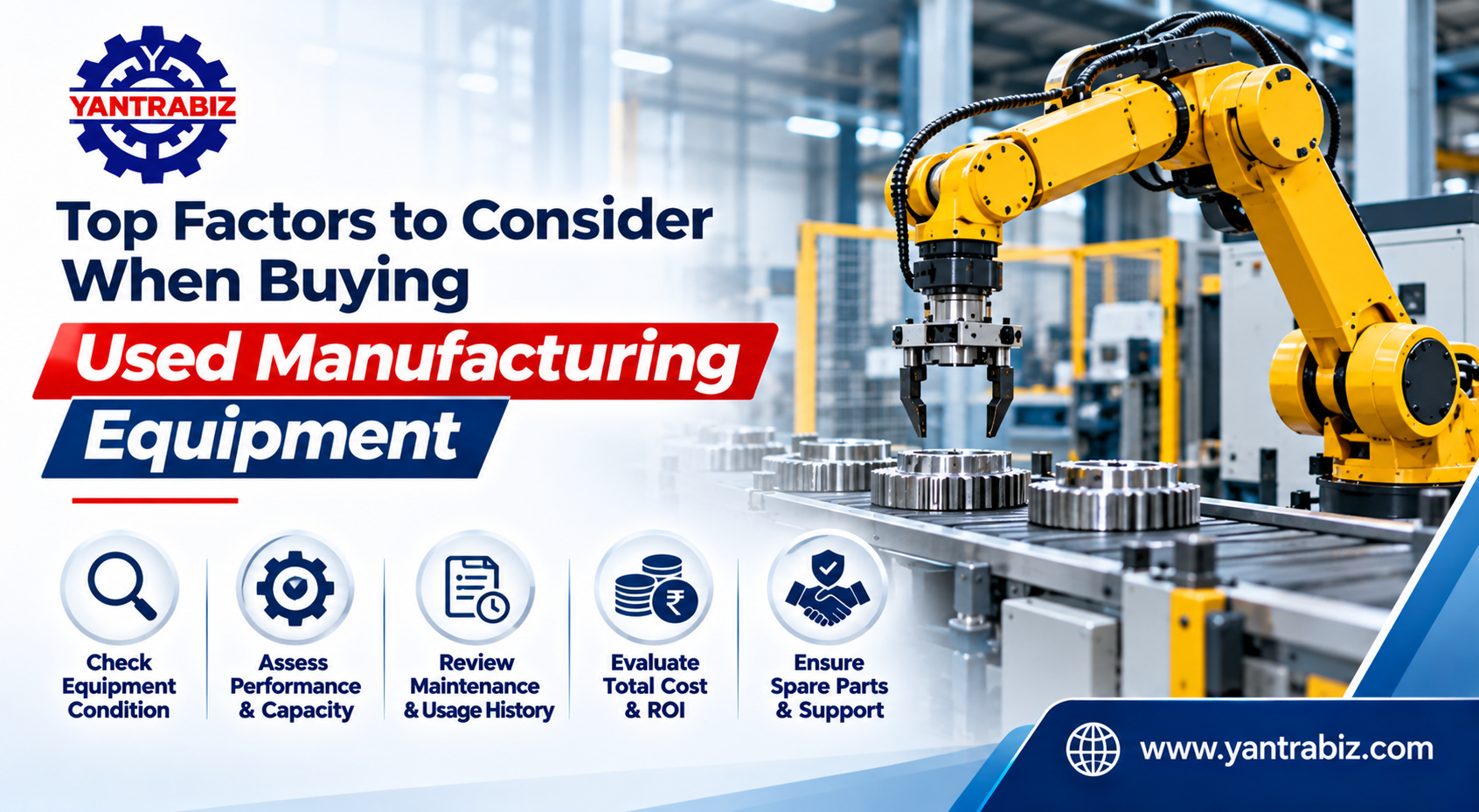
Why Smart Buyers Check Before They Buy Used Machinery
Used machines look great in photos, but photos hide worn parts, weak motors and old repairs. A low price means little if the machine breaks down every week. Repairs, lost time and late orders add up fast and cut into your profit.
A used machine can still be a great deal for your business. Many factories run strong used lines and have done so for years. The trick is knowing what to check before you pay. The factors below help you spot a good machine and skip a bad one.
Top Factors to Consider Before You Pay
1. Your Real Need
Start with the job you need done, not with the price tag. Before you buy used machinery, write down what you make, how much and how fast. Note the size, power and stock the machine must handle. A clear list keeps you from buying a machine that is too big, too small or too slow.
2. Age and Hours of Use
Age tells only half the story of a machine’s life. A ten-year-old machine with light use can beat a five-year-old one that ran day and night. Ask for the run hours or the cycle count of the machine. Ask the seller how many shifts it worked each day over the years. Low use often means more life left in the machine.
3. Physical Condition
Go and look at the machine in person before you decide anything. Check for rust, cracks, leaks and loose parts on the frame and body. Run your hand over the guides and rails to feel for wear. Listen for grinding or knocking sounds when the motor runs. Look closely at the wiring and the control panel for burnt marks. Worn or burnt parts often point to heavy abuse by past owners.
4. A Test Run
Never pay before you see the machine run on a real job. Ask the seller to start it and make a real part. Check the finish and the size of the part with a gauge. Watch for shaking, heat or odd noise during the run. If you cannot visit, send a trusted expert or ask for a live video call.
5. Service History and Records
Good sellers keep records of every repair, check and part change. Ask for service logs, repair bills and the user manual. These papers show how well the machine was cared for. A machine with no records is a big risk for you. You cannot know what was fixed and what was ignored.
6. Spare Parts and Support
Parts wear out over time, even on a very good machine. Check that the maker still sells parts for this model. Ask how long a part takes to arrive at your site. A machine from a brand with no support can sit idle for months. Ask if a local fitter can fix and service it near you.
7. Total Cost, Not Just Price
The price tag is only one part of the cost. Before you buy used machinery, add shipping, setup, repairs and new tooling. Add taxes and any upgrades the machine needs to meet your goals. Compare the full cost with the price of a new machine. If the gap is small, a new machine is the better pick.
8. Seller Trust and Payment Terms
Pick a seller you can trust, and check their past work. Choose a platform that lists used machinery for sale with clear photos and full details. Check reviews and ask to speak with two or three past buyers. Get the deal in writing, with the make, model and serial number. Ask for a short warranty or a return window in case of faults. Pay in steps and hold the last part until the machine arrives and works.
Quick Checklist Before You Pay
- The machine matches your job and output
- Run hours and age are clear
- You saw it run and make a part
- You have the manual and service logs
- Spare parts are easy to find
- The full cost, with shipping and setup, fits your budget
Red Flags to Avoid
These signs often point to a hidden problem with the machine:
- A price far below the market rate
- A seller who will not let you test the machine
- No serial number or papers
- Fresh paint over rusty parts
- Pressure to pay today
If you plan to buy used machinery, treat each one as a stop sign. Walk away and look at another machine from a better seller. A good deal will still be there after a proper check.
Benefits of Choosing Used Equipment
Used machines bring real gains to a business of any size. The price is lower, so you keep cash for other needs like staff and stock. Shipping is faster, since the machine is already built and ready to go. Older models are often built tough and are easy to fix. You can also grow your plant in small steps with less risk.
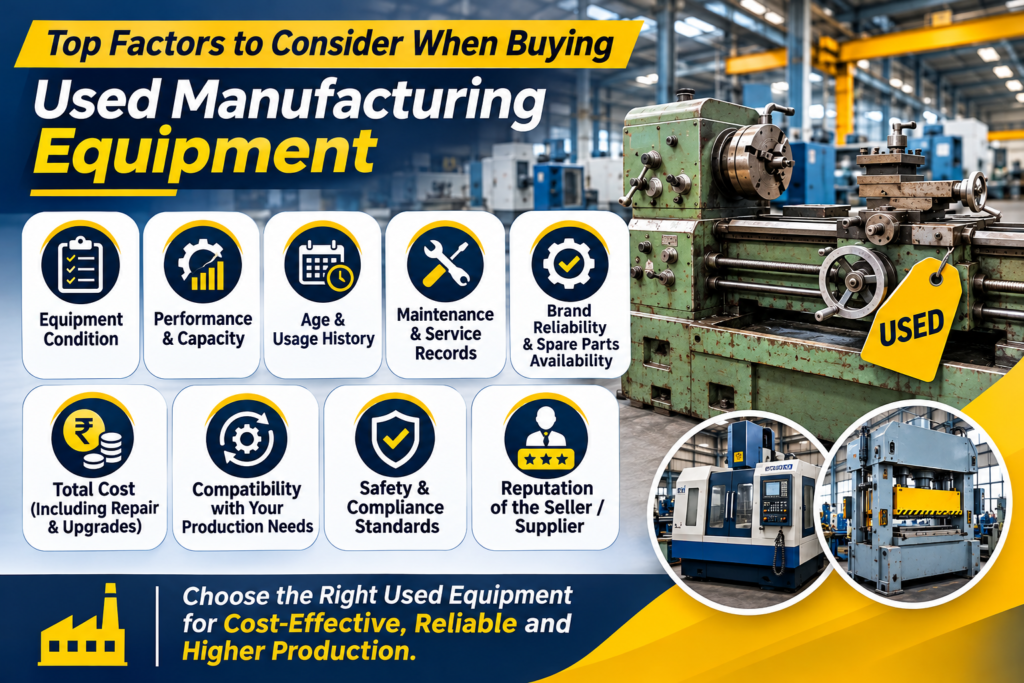
What Buyers Want From Sellers
Buyers look for clear details from every seller they meet online. If you plan to sell used machinery, share the model, age, run hours and records. Add clear photos and a short test video of the machine at work. Clear details build trust and help you close the deal sooner.
Do Your Checks, Then Buy With Confidence
To buy used machinery well, you need a plan and a little patience. Know your need, check the condition, watch a test run and count the full cost. Walk away from any red flags and from sellers who hide details. Follow these steps and your machine will earn back its price.
Ready to start? Browse used machinery for sale at Yantrabiz and find the right machine for your plant. Talk to our team today and get help with your next purchase. Visit Yantra Bizhyp.com to buy and sell used machines today!
Frequently Asked Questions (FAQ)
Yes, it is safe when you check the machine well. Inspect it, watch a test run and ask for records and bills. Buy from a trusted seller and get the deal in writing.
Search trusted online platforms and dealer lists for current listings near you. Ask other factory owners for leads on honest sellers and good deals. Compare three or four listings before you contact any one seller. Pick the listing with clear details, full photos and fair terms.
Used machines often cost much less than new ones of the same type. The gap depends on the age, brand and condition of the machine. Add the cost of shipping and repairs before you compare prices.
Ask for the invoice, service logs, manual and proof of the serial number. Get a clear sale note with the price, terms and shipping date. Keep copies of every paper in one safe folder for later.
Yes, many owners sell used machinery to fund new purchases. Clean the machine, gather your records and share clear photos. Price it fairly by comparing it with similar listings online.